10 Mistakes to Avoid When Building Your Dream House
May 11, 2026
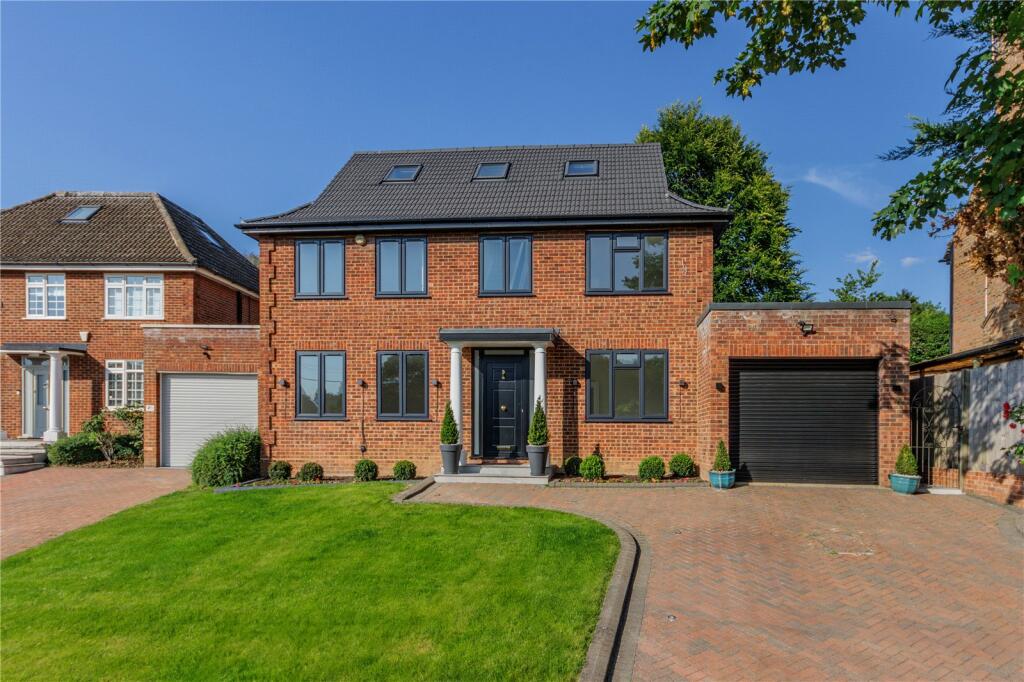
Building a luxury home in London is one of the most ambitious things you can do. It is also one of the most unforgiving. The margin for error is small, the costs of getting it wrong are large, and unlike a bad investment, you cannot simply sell your way out of a badly run build.
Most mistakes are not dramatic. They do not happen all at once. They happen gradually, at each stage of the project, usually through decisions that seemed reasonable at the time. By the time they surface as real problems, they are expensive to fix.
The ten mistakes below are the ones that consistently derail London luxury builds. Some are about money. Some are about process. A few are about human nature. All of them are avoidable.
If you are still working out whether to build or buy, read our post on whether it is cheaper to build or buy a luxury home in London in 2026. And for a full picture of what a build actually costs, our London luxury home build cost guide covers the numbers in detail.
Mistake 1: Setting a Budget Before You Have a Brief
This is the most common mistake, and it happens right at the start. Someone decides they want to spend £3m on a luxury home in London, then they go looking for an architect and a plot. Everything that follows is squeezed into that number.
The problem is that a budget without a brief is just a guess. Until you know what you are actually building, how large it is, what the site constraints are, what level of specification you want, and what the ground conditions are likely to be, your budget cannot be realistic. It is just a ceiling you have invented.
As Craftex notes from nearly a decade of London luxury builds, the fix is to work the other way around. Build your brief first. Define every room, every function, every non-negotiable. Then build a budget from that brief, with a quantity surveyor involved from early in the design process.
A brief-led budget almost always produces a different number to the gut-feel figure you started with. That is not a problem. It is valuable information. It tells you whether what you want is achievable and where you might need to adjust.
The fix: Appoint a quantity surveyor from RIBA Stage 2 onwards. Their job is to turn your design into a reliable cost plan. A good QS fee is recovered many times over in avoided overruns.
Mistake 2: Underestimating the True All-In Cost
Related to the first mistake but distinct. Even people who brief properly tend to underestimate their total project cost, because they focus on the build cost and forget everything else.
According to Buildington's 2026 analysis of London construction projects, one of the most common errors is failing to account for the true, end-to-end cost of a build. Beyond headline contractor quotes, homeowners overlook essential items that add significantly to the final number.
The costs people most commonly miss include:
• Planning fees and pre-application advice: £600 to £5,000+ depending on the borough and project complexity
• Structural engineering, daylight assessments, and specialist reports: £5,000 to £20,000+
• Party wall surveyor fees: £3,000 to £6,000 per affected neighbour, with you bearing the cost if they appoint their own surveyor
• Building control fees: £2,000 to £4,500 for a new dwelling
• Site logistics in London: restricted delivery hours, parking permits, scaffolding licences, waste removal, and access constraints all add cost that does not appear in a standard contractor quote
• Landscaping, external works, and boundary treatments, which are frequently left out of the build contract entirely
• Furniture, window treatments, and fit-out, which on a luxury home at this level can easily add £200,000 to £500,000
On top of all of this, Buildington recommends a contingency allowance of 15 to 20% as best practice for London projects. Not 10%. Not a rough buffer. A properly funded contingency held separately from the main budget, treated as a line item from day one.
The fix: Build your total project budget from the ground up: land, construction, professional fees, planning, logistics, contingency, and fit-out. If any of these are missing, your budget is not complete.
Mistake 3: Buying Land Without Doing the Groundwork First
The excitement of finding a good plot is real. It is also where a lot of projects go wrong. People exchange contracts quickly, worried the plot will disappear, without fully understanding what they are buying.
As Resi's self-build guide warns, you should never purchase a plot without a proper survey carried out by an experienced professional. Chartered surveyors assess land for issues that are not visible from a site visit and not disclosed in an estate agent's particulars.
The things that can fundamentally change the economics of a London build include:
• Ground conditions: clay, peat, or high water tables can require piled foundations instead of standard strip foundations. Page Building Consultants note that this can easily double substructure expenditure before the first brick is laid
• Contamination: former garage, industrial, or commercial sites may need ground remediation before any construction can start, with Phase 1 and Phase 2 environmental surveys required
• Protected trees: trees with Tree Preservation Orders constrain where you can build and how you approach groundworks
• Planning constraints: conservation area designations, listed building curtilage, Article 4 directions, and view corridors can all severely limit what you are allowed to build
• Services and utilities: confirming where gas, water, electricity, and drainage connect to the plot, and what diversions or upgrades are needed, before you buy
A pre-application conversation with the local planning authority before you exchange contracts is one of the most valuable things you can do. It costs a few hundred pounds and can save you from buying land you cannot build on.
The fix: Commission a structural survey, a planning assessment, and if relevant an environmental survey before exchanging contracts. Never rely on the vendor's information alone.
Mistake 4: Choosing Your Architect on Portfolio Alone
Beautiful photographs are not a business reference. They tell you that a practice has good taste and a capable photographer. They do not tell you whether projects were delivered on time and on budget, how the practice handled problems when they arose, or whether the client would work with them again.
For a luxury London build, Rise Design Studio points out that unusually low fees at the early stages often reflect a service that ends at planning, leaving you to manage technical design and construction without proper support. That shortfall tends to surface mid-build as additional fees, cut corners, or a client navigating a live construction site alone. It is a more expensive problem to solve than the fee saving that created it.
The architect you appoint will be your closest professional partner for two to three years. You need someone who:
• Has a track record of successful planning consents in your specific borough or conservation area
• Has delivered full-service projects from planning through to practical completion, not just design to planning stage
• Has worked with contractors of comparable scale and complexity to your project
• You can communicate clearly with and who will give you honest advice, including when your ideas are not feasible
The RIBA Find an Architect tool filters by location and project type and only lists RIBA Chartered Practices. That is a baseline, not a recommendation, but it is a useful starting point for creating a shortlist to interview properly.
The fix: Ask every practice on your shortlist for three client references from comparable projects. Call those clients. Ask how the practice handled problems. Their answers will tell you more than any photograph.
Mistake 5: Appointing the Cheapest Contractor
In London, this mistake is consistent, predictable, and expensive. The cheapest tender almost never turns out to be the cheapest build.
As Buildington explains, low quotes can conceal poor craftsmanship, inexperienced subcontractors, or a lack of essential qualifications. Some companies operate without proper insurance, leaving homeowners exposed to significant risk. When a low-priced contractor encounters unexpected site conditions, material price increases, or scope complexity, they either cut corners or come back with variations that erode the apparent saving within weeks.
For a luxury build, the contractor you appoint is accountable for the quality of every surface, joint, and system in the finished home. Selecting on price alone is selecting the wrong variable.
Evaluate contractors on:
• Relevant experience: have they delivered comparable specification and scale? Ask to see completed projects and speak to those clients
• Current workload: a contractor who has taken on too much will not give your project the attention it needs. Ask directly
• Insurance and accreditation: verify public liability insurance, employer's liability, and relevant trade body memberships
• Contract structure: understand how variations are handled, what the payment schedule looks like, and what protections exist if things go wrong
The Federation of Master Builders provides a vetted builder search and requires members to carry adequate insurance. It is not a guarantee of quality, but it raises the floor.
The fix: Get at least three properly comparable tenders from contractors who have been through the same full technical package. Evaluate on the total relationship, not the bottom line.
Mistake 6: Changing the Brief Mid-Build
This is the single most consistent driver of cost overrun on luxury builds. More reliable than ground conditions. More damaging than planning delays. More predictable than material price rises.
Changes made after construction has started are categorically more expensive than the same changes made at the design stage. Moving a bathroom once the first fix is in costs five to ten times more than moving it on a drawing. Adding a feature mid-build requires variation orders, trade rescheduling, additional structural calculations, and reordering of materials that may have lead times of weeks.
The solution is a complete, locked brief before groundworks begin. Craftex, who have worked across London luxury projects for nearly a decade, put it directly: the brief should cover every room, every function, every non-negotiable, and every lifestyle requirement for the next decade. If it is not in the brief before the contractor is appointed, it should not be in the house.
When changes are genuinely unavoidable, document everything in writing. A formal variation order signed by both parties, confirming the cost and timeline impact before any work proceeds. Verbal agreements in construction are disputes waiting to happen.
The fix: Resolve your specification before the frame goes up, not while a trade is on site. Scope creep mid-construction is preventable. Late design decisions are not.
Mistake 7: Ordering Bespoke Items Too Late
Lead times for the things that define a luxury home are long. Much longer than most people expect when they start a project.
As Craftex notes, Italian stone, bespoke joinery, specialist glazing, and imported tiles are not things you can order last minute. These are not things you can order last minute. The fix is to develop your full specification in parallel with your design, not after it. Every finish should be selected, sampled, approved, and ordered well before it is needed on site.
The typical lead times that catch people out include:
• Bespoke kitchen from a quality maker: 16 to 24 weeks from order to delivery
• Stone for bathrooms and floors from European quarries: 12 to 20 weeks
• Structural glazing and large format sliding doors: 12 to 20 weeks from specialist manufacturers
• Bespoke joinery and fitted wardrobes: 10 to 16 weeks
• Smart home and AV infrastructure: planning and specification must happen at first fix stage, months before second fix installation
If any of these items arrive late, trades are left standing on site with nothing to install. You are paying daily rates for people who cannot work. That cost accumulates quickly.
For kitchen specification at this level, suppliers such as Smallbone, Plain English, and Bulthaup all have long lead times. Start those conversations early, often before planning is even approved.
The fix: Create a procurement schedule at the same time as your construction programme. Every long-lead item should have an order date plotted against the date it is needed on site. If those dates are too close, order earlier.
Mistake 8: Neglecting Party Wall Notices
In London, building close to a neighbouring property is almost unavoidable. Dense terraces, mews streets, and shared walls mean the Party Wall etc. Act 1996 applies to the vast majority of luxury builds and renovations in the capital.
Party wall obligations are not optional and are not planning-related. They are a separate legal requirement. As Rise Design Studio confirms, if the new build is constructed within 3 metres of a neighbouring structure, or involves excavation close to a shared boundary, the Party Wall etc. Act 1996 applies. On tight London plots, this is almost always the case.
The mistake people make is leaving this too late. Party wall notices must be served at least two months before work begins. If a neighbour dissents, a party wall award must be agreed and documented before any work can start. If they appoint their own surveyor, you bear that cost.
Serving party wall notices is not just about compliance. It is about your relationship with the people next door. Neighbours who feel informed and respected before work starts create far fewer problems during it. The Government's Party Wall etc. Act 1996 guidance explains the notice requirements and timelines clearly.
Budget £3,000 to £6,000 per affected neighbour for party wall surveyor fees. If there are multiple neighbours, this adds up. Factor it in early.
The fix: Appoint a party wall surveyor at the earliest possible stage. Serve notices as soon as the project scope is confirmed. Do not treat this as a box to tick at the last minute.
Mistake 9: Treating Smart Home and Sustainability as Afterthoughts
Technology and energy systems need to be designed into a luxury home from the start, not added at the end. Once the walls are plastered, the opportunity to integrate these systems properly has largely passed.
As Step Three Construction highlights in their 2026 luxury build guide, smart homes are no longer a luxury. They are an expectation. Lighting, heating, security, shading, and AV systems are now fully integrated, and they require careful planning. These elements are far easier to design upfront than retrofit later.
At first fix stage, before plastering, all cabling infrastructure needs to be in place. That means every Cat6 data cable, every speaker cable, every control system conduit, and every sensor position needs to be decided before the walls close. Changing any of it afterwards means opening up finished surfaces.
The same applies to energy systems. The 2026 Future Homes Standard now requires a 75 to 80% reduction in carbon emissions compared to 2021 standards. Heat pumps, underfloor heating, mechanical ventilation with heat recovery, and high-performance insulation all need to be sized and coordinated before detailed design is finalised. Adding them as late decisions results in compromised layouts, oversized plant, and higher running costs.
For smart home infrastructure, specialists such as Control4 and Crestron both require early design involvement to ensure the system is specified correctly before any cabling is installed.
The fix: Commission your smart home consultant and M and E engineer at the design stage, not during construction. Their input must reach the contractor before first fix begins.
Mistake 10: Designing for Photography Rather Than for Life
This one is harder to quantify but just as damaging in the long run. Luxury homes are expensive to build, and there is a temptation to make decisions that look good on paper or in images rather than decisions that make the house work well to live in.
As Craftex observes, too many people design a showroom rather than a home. They choose safe materials, avoid bold design decisions, and end up with a beautiful but characterless house that pleases estate agents and disappoints everyone else.
The practical version of this mistake shows up in specific ways:
• Under-specifying storage. Bespoke cupboards, utility rooms, boot rooms, and integrated storage are not glamorous. Their absence is felt every single morning
• Ignoring acoustic performance. Homes where you can hear every word spoken in an adjacent room, where floors creak underfoot, and where London street noise comes through the glazing are unpleasant to live in regardless of how they look
• Optimising for square footage over usable space. A large room with awkward proportions, poor circulation, and no natural light serves no one well
• Neglecting daylight modelling. Light is one of the most powerful elements in a luxury home. Positioning principal living spaces to catch the best light, using roof lights, double-height volumes, and carefully placed glazing requires proper analysis, not guesswork
• Not planning for how life changes. The home that works perfectly for today's family may not work for the family in ten years. Flexible rooms, future-proofed infrastructure, and accessible layouts are worth thinking about from the start
The best luxury homes in London are designed around how people actually live, what they do in the morning, where they want to sit in the evening, how they cook, how they work, and how they want guests to feel when they arrive. That brief only comes from a detailed conversation at the very start of the project.
The fix: Before any design work begins, map out how you actually live in a home, room by room, hour by hour. Share that map with your architect. Design follows from life, not the other way around.
The Common Thread
Look across these ten mistakes and a pattern emerges. Almost all of them happen at the beginning of a project, not the middle or the end. Poor brief. Unrealistic budget. Wrong team. Rushed land purchase. Deferred decisions.
By the time these mistakes become visible problems on site, they are expensive to fix. By the time they are visible in the finished home, some of them cannot be fixed at all.
The projects that go well are not the ones with fewer problems. Every London luxury build has problems. The projects that go well are the ones where the groundwork was done properly before a spade was put in the ground. The right team, a clear brief, a realistic budget, and enough time built into the programme to do things properly.
That is not a complicated formula. But it requires discipline at a stage of the project when everything feels exciting and the temptation is to move fast. Resist that temptation. The time you invest before construction starts is worth far more than the time you spend trying to recover from mistakes once it has.
Recent Blogs
- How Much Does It Cost to Build a Luxury House per Square Metre in the UK? (2026 Guide)
- Building a Basement in London: Costs, Planning and What to Expect
- What Adds the Most Value to a Luxury Home in London?
- What Impacts the Cost of a Bespoke Home Build?
- 10 Mistakes to Avoid When Building Your Dream House