Building a Luxury Home in Virginia Water: A Complete 2026 Guide
September 21, 2026
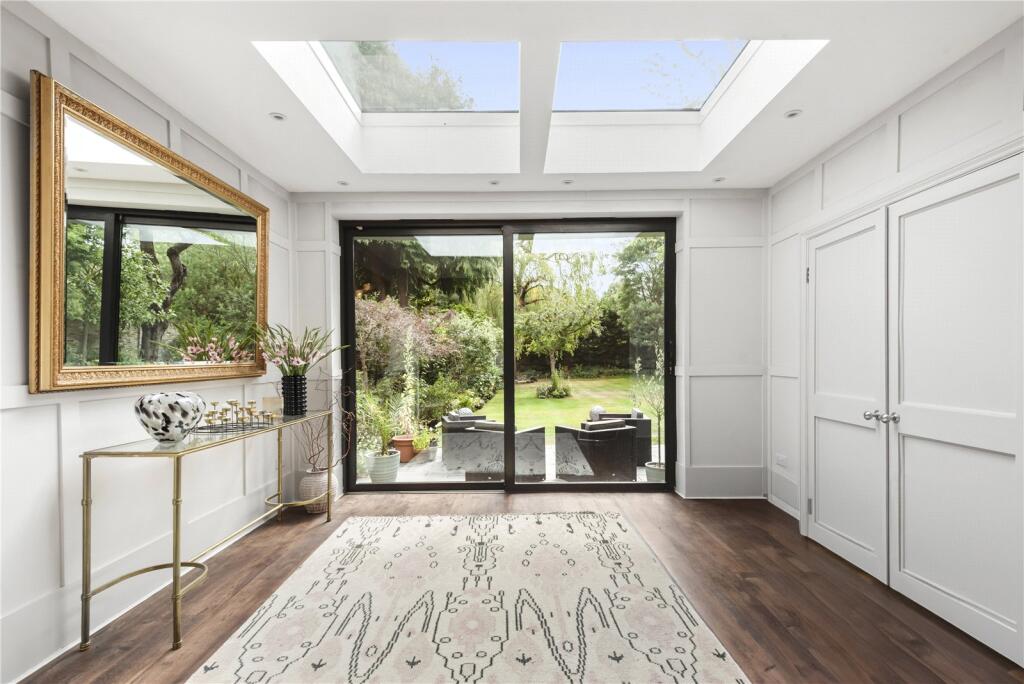
Virginia Water is one of the most sought-after addresses in the UK. It sits in the Surrey commuter belt, 25 miles from central London, and it has everything that buyers at this level are looking for: large private plots, woodland setting, fast rail connections, and a community anchored by the Wentworth Estate and Windsor Great Park.
Building here is different to building almost anywhere else in the South East. The planning environment is more layered, the covenant obligations are more extensive, and the expectations for what a luxury home looks like are set by the quality of the existing stock. None of that makes building in Virginia Water difficult. It makes it specific, and understanding what is specific about it is the most important thing you can do before you start.
This guide covers the Virginia Water property market in 2026, why people choose to build here rather than buy, how the planning landscape works including the newly adopted Neighbourhood Plan, what Wentworth Estate covenants mean in practice, what a luxury build costs in this location, and what the process looks like from plot to completion.
For broader context on the build process, our luxury home build timeline guide, our planning permission guide, and our detailed cost breakdown by specification level all apply directly to a Virginia Water project.
Why Virginia Water Attracts Luxury Home Builders
Virginia Water's appeal is not complicated to explain. It offers a combination of things that is genuinely rare within commuting distance of London.
The location is exceptional. Windsor Great Park forms the northern boundary of the village. Virginia Water Lake, the largest man-made lake in England, sits at its edge. The Wentworth Estate occupies a 700-hectare private gated community at its heart, featuring multi-million-pound homes on generous wooded plots. The village is surrounded by mature trees and open land in a way that is increasingly difficult to find within 30 miles of central London.
The transport links are strong. Virginia Water railway station provides direct services to London Waterloo in approximately 45 minutes. The M25 is minutes away, with Heathrow reachable in 20 to 30 minutes depending on traffic. For families with international connections and professionals who travel frequently, this combination of rural calm and global access is genuinely difficult to replicate.
The schools are among the best in the country. Shrewsbury House, St George's College, Bishopsgate School, and a range of outstanding state and independent schools are within easy reach. For families, this is not a secondary consideration.
The existing property stock sets a very high bar. The Wentworth Estate is home to some of the finest private residences in Britain. Homes of 8,000 to 15,000 square feet on plots of one to five acres are not unusual. The quality and scale of what already exists here creates a market that rewards ambitious building and punishes mediocrity.
The market context: According to Rightmove and Surrey Live 2026 data, the average property in Virginia Water sells for approximately £1.8 million. On the Wentworth Estate itself, significant homes regularly transact at £5m to £15m and above. New builds and recently completed bespoke homes attract a premium over comparable older stock.
Why Build Rather Than Buy in Virginia Water
The same logic that applies across prime London and the Home Counties applies here, but with a Virginia Water-specific dimension.
The existing Wentworth Estate stock is predominantly older homes, many built in the 1970s and 1980s. They sit on superb plots, often with mature gardens, private driveways, and views over the golf course or woodland. But the houses themselves frequently need significant investment. Infrastructure is ageing. Layouts do not suit how people live in 2026. Energy performance is poor by current standards.
Buying an older Wentworth home at £5m to £8m and then spending £1m to £2m bringing it up to a standard that reflects its location is a genuine option. But it means living with someone else's footprint, someone else's internal configuration, and a house that was not designed around how your family actually lives.
Building gives you the plot, which in Virginia Water means the location, the privacy, and the mature trees. And it gives you everything above ground designed from scratch to your brief, your specification, and your lifestyle.
The financial case also holds up well here. As our guide to whether it is cheaper to build or buy a luxury home in 2026 explains, stamp duty on a land purchase is calculated on the land value only, not the finished house value. On a £2m plot in Virginia Water, stamp duty as a primary residence runs to roughly £113,750. Buying a finished £5m house carries stamp duty of approximately £513,750. The saving is nearly £400,000 before any other financial consideration.
Planning in Virginia Water: What Makes It Different
Virginia Water has a more layered planning environment than most locations in the South East. Understanding each layer before you brief your architect is essential.
Runnymede Borough Council
Virginia Water falls within Runnymede Borough Council, which is the local planning authority for all applications in the area. The council's planning department applies the Runnymede Local Plan 2030, which covers housing, design quality, Green Belt policy, and environmental considerations. For a new luxury dwelling on an existing plot, Runnymede is the decision-maker for all planning applications.
The Virginia Water Neighbourhood Plan 2024 to 2035
This is the most significant recent development for anyone building in Virginia Water. The Virginia Water Neighbourhood Plan was formally adopted by Runnymede Borough Council on 3 June 2026, having been approved by a local referendum on 7 May 2026 with an overwhelming 97.58% of votes in favour. It now forms part of the statutory development plan for Virginia Water and applies alongside the Runnymede Local Plan.
The Neighbourhood Plan includes policies on high-quality design supported by a village-specific Design Code. It divides Virginia Water into seven character areas, each with its own design guidance. Wentworth Estate West (Character Area A) sits within the Green Belt. Wentworth Estate East (Character Area B) sits outside it. Trumps Green, St Ann's, Crown Estate, and other areas each have their own character guidance.
What this means in practice: any new build in Virginia Water now needs to demonstrate compliance not just with Runnymede's standard policies but with the specific character area guidance in the Neighbourhood Plan. Your architect needs to be familiar with the Design Code relevant to your plot before a design concept is developed, not after it.
Green Belt
A significant portion of Virginia Water, particularly the western part of the Wentworth Estate and the land around Windsor Great Park, falls within the Metropolitan Green Belt. Green Belt policy places strong restrictions on new development. The principle is that land should be kept open and that new buildings are inappropriate unless they fall within specific exceptions.
For luxury residential projects in the Green Belt, the most viable routes are redevelopment of existing dwellings, which can be accepted where the replacement is not materially larger than what it replaces, and conversions or extensions within the footprint of existing structures. Whole new buildings on previously undeveloped Green Belt land face a very high planning bar and require exceptional circumstances to succeed.
This does not mean you cannot build in the Green Belt. Many outstanding luxury homes have been built within it. But it does mean the planning strategy needs to be carefully developed from the outset, with clear justification for why the proposal meets Green Belt policy, and an architect and planning consultant who have done this before.
Wentworth Estate covenants and WERC approval
If your plot is within the Wentworth Estate, planning permission from Runnymede is not the only approval you need. The Wentworth Estate has its own system of restrictive covenants and a separate approval body, the Wentworth Estate Roads Committee (WERC), which must approve all external works on Estate properties. The Estate's own guidance is explicit: WERC approval is required even if the work is permitted development under Runnymede's planning rules, and this consent is in addition to and independent of any council consent.
This applies to everything visible from the outside of the property. New buildings, extensions, gates, fences, driveways, and even solar panels all require WERC sign-off. The covenants also typically enforce a one-house-per-plot rule across most of the Estate, preventing subdivision of plots for additional development.
The practical implication for a new build: your design needs to satisfy Runnymede Borough Council and the Wentworth Estate Roads Committee as two separate approval processes, each with their own criteria, timelines, and costs. Factor both into your planning programme from day one.
Watch out: Never assume that Runnymede planning permission is sufficient on a Wentworth Estate property. WERC approval is a separate legal obligation. Carrying out work without it is a breach of covenant, regardless of what the planning consent says.
Thames Basin Heaths Special Protection Area
Virginia Water sits within the Thames Basin Heaths Special Protection Area zone, which protects habitat for rare bird species. New residential development that increases the number of homes within 5 kilometres of the heathland requires a Suitable Alternative Natural Greenspace (SANG) contribution and a Strategic Access Management and Monitoring (SAMM) payment. These are statutory obligations, not discretionary, and they add cost to any new dwelling application in the area.
Your planning consultant will calculate the exact contributions required for your project. Budget for this early as it is a fixed cost that cannot be negotiated away.
Finding a Plot in Virginia Water
Available building plots in Virginia Water are rare and rarely openly marketed. The most desirable plots, those with mature trees, generous boundaries, and good privacy from neighbours, are typically acquired through professional networks before they reach any portal.
The most productive search channels for Virginia Water specifically:
• Knight Frank's Virginia Water office handles a significant proportion of prime Virginia Water transactions and often has advance knowledge of plots before they are publicly listed. Register a direct interest and follow up regularly
• Savills, Strutt and Parker, and Hamptons all have active Surrey country house divisions with knowledge of the Wentworth Estate market and surrounding areas
• Runnymede Borough Council's planning register is searchable by postcode. Applications for demolition or new dwellings in GU25 signal plots that may be coming to market
• The Wentworth Estate itself sometimes has knowledge of owners considering selling. A relationship with the Estate management and WERC can be valuable for advance information on opportunities
• Direct approaches to owners of properties on large plots or older homes that are clearly under-occupied. Land Registry title searches are free and identify owners
The other thing to know about Virginia Water plots: they are not uniformly available across the village. The Wentworth Estate, St George's Hill (just to the south in Weybridge), and the private roads in Trumps Green and Crown Road areas each have their own character and their own planning constraints. Being clear about which part of Virginia Water you are targeting before you start searching saves significant time.
For a detailed guide to the plot search and due diligence process, our practical guide to finding a building plot in London and the Home Counties covers the full process including legal checks, ground surveys, and how to assess planning constraints before exchange.
What the Market Expects: Design and Specification in Virginia Water
Virginia Water is not a market where average is acceptable. The buyers who purchase at this level, and the planning context that governs what gets built, both set a high bar for design quality and specification.
Design character
The Wentworth Estate has historically been associated with large traditional and neo-Georgian homes. Grand symmetrical facades, slate roofs, tall chimneys, and formal entrance gates. This character is deeply embedded in the Estate's covenant framework and in the expectations of buyers at this level.
Contemporary architecture is becoming more accepted, and some of the finest new homes on the Estate in recent years have been bold contemporary designs that respond to the woodland setting rather than replicating the period vocabulary. The recently approved Consero development on Stroude Road introduced what the developer described as an elegant modern Tudor aesthetic, demonstrating that Runnymede and WERC are receptive to well-argued contemporary proposals that respect the scale and character of the area.
What is not accepted is mediocrity. Poorly resolved facades, cheap materials, or designs that look out of place in the context of their neighbours will not pass planning or WERC approval, and they would not sell well if they did. The investment in a genuinely good architect, one with experience delivering luxury homes in the Surrey Green Belt and ideally with a track record on the Wentworth Estate, is non-negotiable at this level.
Scale
Homes in Virginia Water tend to be large. A three to four bedroom house on the Estate is a relatively modest proposal by local standards. Most serious luxury briefs here start at 5,000 to 7,000 square feet and the most significant homes exceed 10,000 square feet. Outside the Estate, on the private roads and village streets, scale expectations are slightly more modest but still well above regional averages.
Green Belt policy does apply restrictions on replacement dwellings in terms of floor area increase over the existing structure. Understanding the permitted increase before you develop your brief is essential so you do not design a home that planning cannot accommodate.
Outdoor living
Virginia Water plots are often the finest thing about them. Mature oak and pine trees, generous setbacks, long private driveways, and gardens that merge into the woodland setting. The brief for a luxury home here should treat the landscape as central, not secondary. Luxury homes across Surrey and Berkshire now regularly feature outdoor kitchens, covered terraces, swimming pools with pool houses, and architectural lighting throughout the garden. These are not optional extras at this price point. They are standard expectations.
Sustainability
The 2026 Future Homes Standard requires all new builds to produce 75 to 80% fewer carbon emissions than 2021 standards. In practice this means heat pumps, high-performance insulation, MVHR ventilation, and triple-glazed windows across the building envelope. For a woodland setting like Virginia Water, these requirements align well with what buyers want: a home that performs quietly and efficiently in a natural environment, without the noise and visual intrusion of ageing mechanical systems.
What Does It Cost to Build a Luxury Home in Virginia Water?
Build costs in Virginia Water sit between outer London and the Home Counties benchmarks. The Surrey premium reflects the same labour market as London, where skilled trades are scarce and rates are high, in an environment where site access is generally easier and the programme logistics are more manageable than in central London.
Using 2026 benchmarks from RapidQS and DeVis Architecture's Surrey cost data, realistic construction costs per square metre for Virginia Water in 2026 are:
• Good specification (mid-range kitchen, underfloor heating, aluminium windows): £2,800 to £3,500 per square metre
• High specification (bespoke kitchen, smart home systems, structural glazing, natural stone): £3,500 to £5,000 per square metre
• Ultra-high-end bespoke (full Wentworth Estate specification, imported stone, Crestron automation, indoor pool): £5,000 to £7,000 per square metre and above
For a 600 square metre luxury home at high specification, construction costs alone run to £2.1m to £3m. Adding professional fees at 12 to 15%, landscaping to reflect the quality of a Virginia Water plot, smart home infrastructure, planning costs, and a 12 to 15% contingency brings the total project cost to £2.8m to £4.2m before land.
Land on the Wentworth Estate with planning consent for a substantial new dwelling is typically priced at £1.5m to £3.5m depending on plot size, location on the Estate, and what is currently standing on it. Off-Estate plots in Virginia Water village and the surrounding roads vary more widely but rarely offer the same scale or privacy at any price.
All-in budget guide: For a substantial luxury new build in Virginia Water at high specification, 500 to 700 square metres, a realistic all-in budget before furnishing is £4m to £7m. Wentworth Estate plots at the larger end of the scale, with ultra-high-end specification, can reach £8m to £12m total project cost.
The Build Process: What Is Specific to Virginia Water
The standard luxury build timeline applies here with a few additions specific to this location.
Planning pre-application
Given the Neighbourhood Plan, the Green Belt policy on parts of the Estate, and the WERC covenant process, pre-application engagement should happen on two tracks simultaneously. A pre-application meeting with Runnymede Borough Council establishes the principle of development and the council's expectations on design, scale, and impact. A parallel conversation with WERC if the plot is on the Estate establishes their design expectations before significant fees are spent on detailed drawings.
These two bodies do not always want exactly the same thing. An experienced architect who has navigated both processes before is essential.
Thames Basin Heaths contributions
At application stage, the biodiversity net gain and Thames Basin Heaths contributions need to be calculated and agreed with Runnymede. These are conditions attached to the planning consent that must be discharged before development commences. Build them into your programme and budget.
Surrey contractors
The best luxury contractors in Surrey are a well-known group and they are consistently busy. They book 6 to 12 months in advance. A contractor who has worked on the Wentworth Estate before will understand the WERC requirements, the quality expectations of the local market, and the working practices that come with operating in a private estate environment. This is worth paying for. A contractor without this background will learn on your project, which is not where you want the learning to happen.
Surrey County Council highway and access
Roads within the Wentworth Estate are managed by the Wentworth Estate Roads Committee, not Surrey County Council. Roads outside the Estate are managed by SCC. Any new access points, changes to driveways onto adopted roads, or alterations affecting the public highway require SCC highways approval in addition to planning consent. Check which authority manages the road adjacent to your plot before you finalise your access design.
Finding the Right Team in Virginia Water
The professionals who know this market well are not difficult to find but they are busy, and the best of them will assess the project before they commit to taking it on. A well-presented initial brief, a realistic budget, and a clear timeline gives them confidence that the project is worth their time and yours.
Architecture practices with a track record of luxury residential work in Surrey, particularly on the Wentworth Estate and St George's Hill, include firms based in Guildford, Windsor, and London's West End who have delivered significant homes in this market over many years. Ask specifically about their experience with Runnymede planning, WERC approvals, and Green Belt applications. General competence is not sufficient here.
For quantity surveying and cost management, a QS practice with Surrey residential experience will have cost data specific to this market and relationships with local contractors that help with competitive tendering. The RICS find-a-surveyor tool is the starting point for identifying accredited practices.
For planning consultancy, look for a consultant who has worked with Runnymede Borough Council specifically. Surrey has multiple planning authorities and their policies differ. A consultant who knows Runnymede's planning committee, their preferred approach to Green Belt applications, and the Virginia Water Neighbourhood Plan will add more value here than a generalist from a London firm. The Planning Portal's planning application search allows you to search for recent approvals in GU25 to identify which architects and agents are winning consent in Virginia Water.
Is Building in Virginia Water Worth It?
The honest answer is yes, if you do it properly.
Virginia Water is one of the few locations in the UK where the combination of plot quality, market depth at high price points, and buyer expectations for specification all justify a genuinely ambitious build. The homes that have been built here to the highest standards are exceptional assets that hold their value through market cycles.
The market also absorbs new construction well. Buyers in this market understand that a new build to a proper specification represents better value than an older home that will cost significant money to bring up to modern standards. The premium that a well-executed new luxury build commands over comparable older stock is real and meaningful in Virginia Water in a way that it is not in every location.
What the location does not forgive is cutting corners. A poorly specified build in a market where buyers have high expectations and access to excellent alternatives does not perform. The investment in a genuinely good team, a properly funded budget, and a brief that reflects what this location demands is the most reliable way to ensure the project delivers both the home you want and the financial outcome it should produce.
Where to Start
If you are seriously considering building a luxury home in Virginia Water, the first three steps are:
• Find out the planning status of any plot you are considering and establish whether it sits within the Green Belt, within the Wentworth Estate covenant area, and within the Thames Basin Heaths contribution zone. All of this is discoverable before any money is spent
• Appoint an architect with specific Virginia Water or Wentworth Estate experience before you make an offer on a plot. Their assessment of what is buildable on the site and what the planning process will involve should inform the price you are willing to pay
• Engage a quantity surveyor to produce a high-level cost plan against your brief and the site constraints. Know what the project costs before you are committed to the land purchase
Virginia Water rewards preparation. The projects that go well here are the ones where the team was right, the brief was clear, and the budget was realistic before the first meeting with the council.
Recent Blogs
- Building a Luxury Home in Virginia Water: A Complete 2026 Guide
- How Much Does It Cost to Build a Luxury House per Square Metre in the UK? (2026 Guide)
- Building a Basement in London: Costs, Planning and What to Expect
- What Adds the Most Value to a Luxury Home in London?
- What Impacts the Cost of a Bespoke Home Build?